BBQ Maintenance that Can Save Your Life

According to the National Fire Protection Association (NFPA), more than 160 people are injured each year in BBQ mishaps. That doesn’t sound like a lot considering the number of people who flip burgers on their backyard grills each year. But, you certainly don’t want to be one of those who get injured!

The best way to prevent fire and injury is maintenance. Remarkably, few people are even aware that BBQ maintenance is necessary. It is.

Every summer, experts say you should clean out the venturi tubes. Those are the little metal pipes that carry propane or natural gas. Pipe cleaners work well, although hardware stores also carry specialized tools for this purpose. The goal is to clean out any built-up dirt and debris. Don’t be surprised if you find spider webs inside a venturi tube!

Your BBQ grills should also be cleaned with soap and water each year. Just scraping them before barbequing isn’t enough. Fat and oils from cooking can build up on grills and harden. If you’re getting a lot of flare-ups, this may be the cause.

Finally, make sure nuts and bolts are tightened regularly, and replace any rusty hardware. Regular use, heat and weather can loosen or weaken bolts, particularly on the frame. Several fires each year are caused by BBQs tipping over or collapsing.

Shawna O’Brien
shawna.obrien@talktotucker.com
F.C. Tucker Geist Fishers
The Tumbarello Group

Does Your Home Insurance Cover Everything?

When you suffer damage to your home or its contents, you expect your insurance company to help you out. And, most do a good job of doing just that.

Still, it’s a good idea to review your policy with your insurance advisor and find out what’s covered and what isn’t. For example, you don’t want to discover that your policy will not cover the cost of repairing the damage caused by a flood in your laundry room.

Pay particular attention to coverage in the case of water damage. Some insurance policies don’t cover floods and sewer backup unless an additional rider is purchased.

Also, check liability limits. Ask your advisor to recommend an appropriate level. Finally, make sure you know exactly how much your home is insured for. Are you covered for the full replacement cost? Are you comfortable with that coverage or would you rather only insure for the actual cash value?

Having the right insurance policy gives you peace-of-mind and is an important part of enjoying your home.

Shawna O’Brien
shawna.obrien@talktotucker.com
F.C. Tucker Geist Fishers
The Tumbarello Group

Whole-Home Security Systems Continue to Evolve

Until recently, even the latest home security system could become obsolete overnight. But, newer whole-home integration systems are much more compatible with interchangeable parts and innovative add-ons.

As a result, it’s now possible to have a multi-faceted security system that watches over many of the functions and activities in and around your home. For example, you can organize and control your home’s exterior cameras, motion detectors, door locks, window coverings, lighting, entertainment, appliances and HVAC with one system.

If you’re buying an entirely new system, there are many established and emerging brands available, so consider their functions, cost, convenience and reliability. But, if you want the whole-home system to manage existing utilities and appliances, things can become challenging. You will need to ensure that your specific devices can communicate with your new hub, which means you need to identify the protocol under which they can share information. Because their compatibility is not certain, it’s advisable to identify the make and model of your existing equipment and check for compatibility before you purchase a new security hub or system.

Shawna O’Brien
shawna.obrien@talktotucker.com
F.C. Tucker Geist Fishers
The Tumbarello Group

DIY Projects You Can Do at Home

paint brush

DIY Projects You Can Do at Home

During the last several weeks, you may have noticed some things around your home that need some attention. You may have even tackled a few projects. Need ideas? Here are a few DIY projects that can easily be done and will make a difference in your space.

Paint an Accent Wall in Your Living Room

Paint is one of the cheapest, easiest ways to transform the look of your home. If you’ve been dying to try a bold color in your living room but don’t want to commit to anything drastic, an accent wall can let you experiment.

If you’re looking for inspiration, Classic Blue is Pantone’s 2020 Color of the Year and considered a great shade to match with virtually any kind of decor, whether you prefer a modern, classic or rustic look. You can also simply choose whatever color you’re already using as an accent and go bold. Since this is such an easy project to do (or re-do), there’s no reason to fear; if you hate it, you can simply paint over it again.

Create a Gallery Space for Your Art

Now that you’ve got a fantastic accent wall going, why not use it to highlight your favorite artwork? Grab a bunch of old frames and paint them the same neutral color (black or white or brown, depending on the remainder of your walls) and group several together in one spot. Since mirrored walls are also popular, you may want to gather several mirrors and intersperse them among the artwork for a creative combo.

Don’t be concerned about sizes or styles. Part of the goal is to create some visual interest that keeps rewarding people as they continue to look at your choices. The only rule is to hang what you love since this is your space. Don’t have enough spare art sitting around? Put your kids to work with crayons or fingerpaint and frame the results!

Fix Those Screen Doors

Screen doors get pretty neglected, especially over the cold winter months when they’re sitting in storage or otherwise ignored. Now that the weather’s getting nice, however, you don’t want those tattered screens to stop you from opening the door and letting in the spring air.

This requires a minimum of tools (you’ll probably only need a Phillips-head screwdriver, an awl and something that you can use to trim the replacement screen) and strength to accomplish. If you’ve never fixed a screen door before, don’t feel intimidated — there are plenty of videos available that will walk you through the steps needed to re-screen a door.

Add Some “Smart” Features

If you’ve been meaning to explore some “smart” additions to your home, now is the time to do it. You can easily order home automation components through the mail that will work with your existing technology, and most upgrades are inexpensive and easy to self-install.

Some fan-favorites that you may want to explore include:

• A smart thermostat: These programmable devices can connect to a voice-assistant like Alexis or your smartphone — or you can set them and forget them at will. Either way, they’re bound to keep your home more comfortable and keep your utility bills more tightly controlled.

• Smart lights: Imagine being able to adjust your lights without getting out of bed, or knowing that you can turn your lights on and off remotely for security even when you aren’t home.

• Smart locks: Never worry about losing your key (or having the kids lose theirs) again. A smart lock combined with a security camera is one of the best-loved security features of modern times.

The best part about putting your energy and money into wireless technology and smart home features is that you really get a return on your investment. Voice-controlled home technology is in hot demand among most consumers. The vast majority of homebuyers already appreciate smart home products and consider them an important feature when they’re searching for their next residence.

Add Some Decorative Storage Space

Shelving is one of the best ways you can both increase your home’s storage space and add decorative elements. All it takes to put up some nice shelves are some sturdy brackets, screws and a few heavy boards — or you can invest in a few pre-made shelves.

Either way, consider adding a touch of color to the shelves, especially if you are putting them in the same room where you’ve already added an accent wall. That will help tie the look of your room together (and still be easy to change if you decide you want to go with another shade down the line).

Once you have your shelves where you like them, try adding a mix of functional and decorative items to the shelf until you have a combination that’s both pleasing and useful. Pairing books with your favorite hanging vine or a cool piece of metal art, for example, can create a cozy look.

Shawna O’Brien
shawna.obrien@talktotucker.com
F.C. Tucker Geist Fishers
The Tumbarello Group


Image result for let's talk tucker

How to Quickly Improve Indoor Air Quality

There are many reasons why the air quality in your home may not be at its best. A faulty furnace or an aged carpet are just two potential culprits. Until you get those issues addressed, how can you make your indoor air healthier – today?

Here are some ideas:

Check the furnace filter. This is one of the most overlooked maintenance items in the home. Any furnace repair person can tell you stories about filters they’ve seen caked in dust. Make sure those aren’t yours. Air passes through those filters before circulating throughout your home. Replacing a filter takes less than five minutes.

Clean the drains. Drains are a surprisingly common source of odor in the home. Most people only clean them when they’re clogged, but they should be flushed thoroughly with a good-quality cleaner at least once a season.

Turn on the bathroom fan. Not only do bathroom fans remove odor, they also reduce moisture build-up. About 50% of air pollutants originate from some type of moisture. Mold is the worst of these pollutants. Professionals recommend you keep your bathroom fan on for at least 30 minutes after a shower.

Clean your doormat. Even if your doormat doesn’t smell, it can be a source of air pollutants. When people wipe their shoes, they transfer outside ground pollutants from their shoes to your mat.

Of course, you can always open a window. That’s the most popular and easiest way to freshen the air, and it works.

Shawna O’Brien
shawna.obrien@talktotucker.com
F.C. Tucker Geist Fishers
The Tumbarello Group

Healthy Lighting for Your Home

Recently, researchers discovered that the lighting in your home can have a much greater impact on your health and well-being than originally thought. Better lighting can boost your energy, help you sleep better, and even enhance healing.

So, it pays to make sure the lighting in your home has a positive impact on the health of your family.

Start by enhancing sources of natural light, such as windows and skylights. Study each room of your home and replace as much of the artificial light as possible with sunlight. For example, reposition a favorite reading chair next to a window.

Consider dimming the lighting in your home during the evenings. If your home is very bright when it’s dark outside, it can affect your body’s natural rhythms, resulting in disturbed sleep.

Avoid over-lighting, which is common in rooms where there are few windows. Over time, excessive light can cause headaches and even mood changes. Lighting that is sufficient to see everything clearly is all you need.

Shawna O’Brien
shawna.obrien@talktotucker.com
F.C. Tucker Geist Fishers
The Tumbarello Group

A Quick Household Check Helps Conserve Resources

This is a good time to visually check of all your utilities, fixtures and appliances to make sure they are not using expensive energy and resources inefficiently.

Start with the faucets. Ensure they don’t drip when closed. If they do, replace the washers (or in the case of washerless units, the valve cartridges).

Next, check that your toilets don’t leak. To check for leaks, pour colored liquid bowl cleaner into the tank, then wait several hours to see if it appears in the bowl without flushing. If it does, you likely have a leak, and may need to replace the stopper in the bottom of the tank.

Then, make sure your hot water tank and/or pipes are not sweating. While you’re at it, consider turning down the tank thermostat by a couple of degrees – chances are you won’t notice a difference, except hopefully on your energy bill.

Finally, check that windows and doors are not drafty. If they are, consider caulking, repairing or replacing them.

Shawna O’Brien
shawna.obrien@talktotucker.com
F.C. Tucker Geist Fishers
The Tumbarello Group

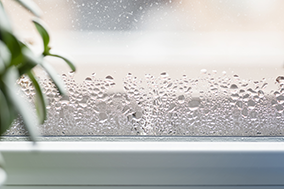
Moisture on Windows

You’re standing by your window admiring the view. Then you notice it. Moisture has built up around the edges of the glass. Should you worry?

It all depends on the reason for the build up.

Assuming you have traditional double-pane glass in your windows, there are a few things to look for if you notice moisture.

Often, moisture at the bottom of your windows is simply caused by too much humidity in your indoor air. If that’s the case, simply adjust your humidifier.

If the moisture is on the outside of the window, typically there’s also no problem with the window itself. It may have rained recently, or the outside humidity may have spiked causing the accumulation. Generally, there’s no reason for concern.

However, if the moisture is in between the two panes of glass, the seal has broken and surrounding air – along with its water content – has made its way in. This disrupts the thermal barrier of the window, reducing its energy efficiency. In fact, the glass might feel noticeably colder than your other windows on chilly days. In that case, you’ll need to replace the pane.

Similarly, if the moisture is coming in through only one spot – the bottom right corner for example – then you might have a leak. If you have a wood frame or sill, you may also notice a growing water stain. It’s important to get leaks fixed quickly. There may be water damage occurring within the frame that you cannot see.

Shawna O’Brien
shawna.obrien@talktotucker.com
F.C. Tucker Geist Fishers
The Tumbarello Group

Spring Cleaning and Home Maintenance Tips

Looking for something to do around the house these days?

Here’s a few places to start:

Clear out the Clutter

There’s a lot going on during the winter months and throughout the holiday season, so household clutter tends to accumulate. Excess clutter can raise the level of cortisol, the “stress hormone,” in your body and tax your physical and mental health. The visual noise from excess clutter can even make it harder to think about what you need to do and make decisions.

The first step toward spring cleaning should be eliminating excess clutter. Start a donation pile and grab a waste bin and ask yourself as you pick up each item, “Do I really want this enough to put it away?” It may feel a little ruthless throwing out those old Christmas cards, for example, but unless you honestly think that you’ll look at them again they aren’t worth keeping.


Make an Indoor Cleaning Schedule

Starting from the inside and working out is a great way to get a grip on your cleaning and maintenance, but everything is easier to handle when you break it down into small steps and take them one at a time. A spring cleaning and maintenance schedule can help you focus your energy and time, and keep you from overlooking something important.

To make your spring cleaning schedule, grab a pen and a notebook. For now, concentrate just on the inside of your home:

  • Walk through and inspect your home. What areas have been most neglected over the winter? What areas get skipped during routine cleaning? Is there any particular task, like cleaning out the cupboards, that you’ve been putting off? Make sure they all go on the list.
  • Break down the tasks by room. Just writing “clean the bathroom” is too vague and can either leave you overwhelmed or liable to forget something important. Instead, be specific. List separate tasks like “re-caulk the tub,” or “clean the grout in the shower” so that you can better see what has to be done.
  • Set reasonable goals. You know how much you can accomplish in a given day without feeling burnt-out, so plan accordingly. Consider assigning yourself the small tasks (things that should take less than an hour) on the weeknights after work. Save the bigger jobs for the weekend.
  • Enlist help from your family. If your spouse and kids can pitch in, let them. You can coordinate the work and assign the jobs so that nobody is left wondering what they should do to help — and you don’t get frustrated from doing everything on your own.


Inspect the Exterior of Your Home

Winter isn’t just hard on people — it’s hard on buildings. Over the last few months, your home has endured everything from sudden cold snaps and thaws to piles of ice and snow. It’s time to look around to see what may need repairs — even if you can’t get to them right away.

As soon as the weather (and your time) permits, take a walk around your property and be ready to make notes. Take a good look at the following:

  • Roofing: You probably don’t have to climb up there to see if you have any lifted shingles or bare spots. Visible cracking, shifted and missing shingles are a sign that your roof is going to need a little tender care as soon as possible.
  • Chimneys: Look for cracked and missing mortar along the joints between your bricks that signal a need for repairs. You may also find that your chimney cap is missing or damaged thanks to winter winds.
  • Siding: Your siding may be a little worse for the wear, especially if you live in a high-traffic area where there’s been a lot of road ash or salt laid down. Look for loose pieces that need to be reattached and make note of whether or not you’ll need to pressure wash the house once summer is here.
  • Gutters: No matter how carefully you cleaned them before winter, the odds are high that your gutters are full of leaves and sludge again. If they are, you want to move those to the top of your list of necessary outdoor jobs as soon as it’s warm enough.

You probably can’t handle these repairs immediately, but you should be aware of them early so that you can plan for the work and any extra expense as soon as possible.

Handle the Seasonal Preparations

There are a few household jobs that are just necessary every spring if you want to have an easy summer. They include:

  • Replacing your furnace and HVAC filters: Those old filters from the start of winter have probably seen better days, and new filters will keep your home cleaner (and much more allergen-free).
  • Checking the dehumidifier: If you have a basement dehumidifier, it’s time to check the hoses, filters and other working parts to make sure it’s still operating properly — especially with spring rains coming up.
  • Getting the garden tools ready: Dust off the mower and make sure it’s charged or has plenty of gas, and make sure that your trimmers and other garden tools are clean and ready.

All of this work can go quickly if you keep at it. We suggest keeping your list pinned up to the fridge where you can check it daily — and check off the tasks as you do them for a greater sense of accomplishment and a happier, healthier spring.


Shawna O’Brien
shawna.obrien@talktotucker.com
F.C. Tucker Geist Fishers
The Tumbarello Group

Image result for let's talk tucker