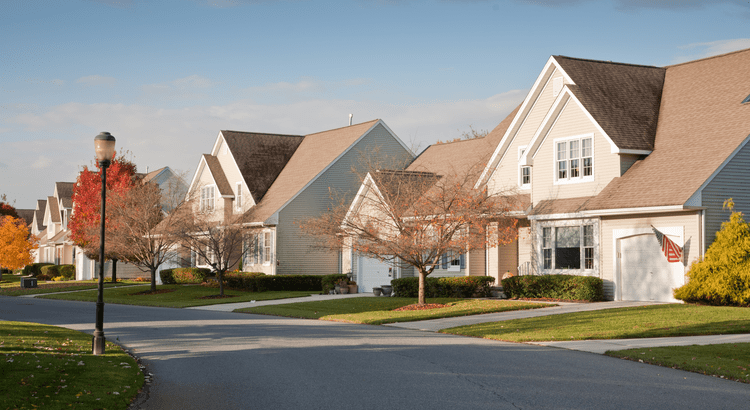
Why Your House Will Shine in Today’s Market

Why Your House Will Shine in Today’s Market

Even though there are more homes available for sale than there were at this time last year, there are still more buyers than there are houses to choose from. So, know that if you’ve got moving on your mind, your house can really stand out.

There are several key reasons why there aren’t enough homes to go around and understanding them will help you see why the market is working in your favor if you’re ready to make a move.

What’s Causing the Shortage?

1. Underproduction of Homes: For years, the industry hasn’t built enough homes to keep up with demand. As Zillow explains:

“In 2022, 1.4 million homes were built — at the time, the best year for home construction since the early stages of the Great Recession. However, the number of U.S. families increased by 1.8 million that year, meaning the country did not even build enough to make a place for the new families, let alone begin chipping away at the deficit that has hampered housing affordability for more than a decade.”

2. Rising Costs: Building materials, labor shortages, and supply chain disruptions caused by the pandemic have all made it harder and more expensive to build homes. This can either limit or stop new home construction in some areas.

3. Regional Imbalances: Some markets are more affected by the shortage of homes than others. Popular and more desirable areas have more people moving in faster than new homes can be built. The number of new building permits issued doesn’t always keep pace with job growth in these regions, and that leads to even tighter markets and higher prices.

How Big Is the Problem?

According to estimates from Real Estate News, the U.S. is facing a housing shortfall of roughly 3.3 million homes, based on an average of several expert insights (see graph below):

This shows there’s a significant number of homes that need to be built just to meet current demand from buyers. But what about future demand?

According to John Burns Research and Consulting (JBREC), over the next 10 years, the U.S. will need about 18 million new homes to meet projected demand, including homes for new households, second homes, and replacements for aging or unusable homes.

So, even though more homes are on the market compared to last year, there still aren’t enough of them to go around. This is where you can really win if you’re ready to sell your house.

What You Need To Remember

If you’re thinking about selling, the shortage of homes for sale means your house is likely to get some serious attention from buyers. It’ll take years to climb out of this inventory deficit, and the market is still very tight. So, when buyers are competing for relatively few homes like they are right now, that creates more interest in the houses that are on the market, putting upward pressure on prices and ultimately working in your favor.

And since every market is different, it’s important to work with a REALTOR who understands local trends. I can help you price your house right and create a strategy to attract the right buyers.

Bottom Line

While there are more homes for sale than there were at this time last year, there’s still a shortage overall. And this puts you in the driver’s seat as a seller. I can help you take advantage of today’s market.

Shawna O’Brien
Residential Broker
KW Portfolio Collective, Geist Fishers
317-506-0039
ShawnaOBrienRealtor@gmail.com
How Mortgage Rate Changes Impact Your Homebuying Power

How Mortgage Rate Changes Impact Your Homebuying Power

If you’re thinking about buying or selling a home, you’ve probably got mortgage rates on your mind. That’s because you’ve likely heard that mortgage rates impact how much you can afford in your monthly mortgage payment, and you want to factor that into your planning. Here’s what you need to know.

What’s Happening with Mortgage Rates?

Mortgage rates have been trending down recently. While that’s good news for your homebuying plans, it’s important to know that rates can be unpredictable because they’re affected by many factors.

Things like the economy, job market, inflation, and decisions made by the Federal Reserve all play a part. So, even as rates go down, they can still bounce around a bit based on new economic data. As Odeta Kushi, Deputy Chief Economist at First American, says:

“The ongoing deceleration in inflation, coupled with the Federal Reserve’s recent indication of potential rate cuts [in 2024], suggests an environment supportive of modest declines in mortgage rates. Barring any unforeseen circumstances and resurgence in inflation, lower mortgage rates could be on the horizon, but the journey towards them might be slow and bumpy.

How Do These Changes Affect You?

When mortgage rates change, it affects how much you pay each month for your home loan. Even a small rate change can make a big difference to your monthly bill.

Take a look at the chart below to see how different mortgage rates impact your house payment each month for various loan amounts. Imagine you can afford a monthly payment of $2,600 for your home loan. The green part in the chart shows payments in that range or lower based on varying mortgage rates (see chart below):

Understanding how mortgage rates impact your payment helps you make better decisions.

How Can You Keep Track of the Latest on Rates?

Real estate agents have the expertise to help you understand what’s happening and what it means for you. They can provide tools and visuals, like the chart above, to show how rate changes impact your buying power.

You don’t need to be a mortgage expert; you just need a professional by your side. Someone who can help you make sense of the market and guide you through your homebuying or selling journey.

Bottom Line

If you have questions about the housing market, reach out me. I can help you understand what’s going on and how to navigate it.

Shawna O’Brien
Residential Broker
KW Portfolio Collective, Geist Fishers
317-506-0039
ShawnaOBrienRealtor@gmail.com

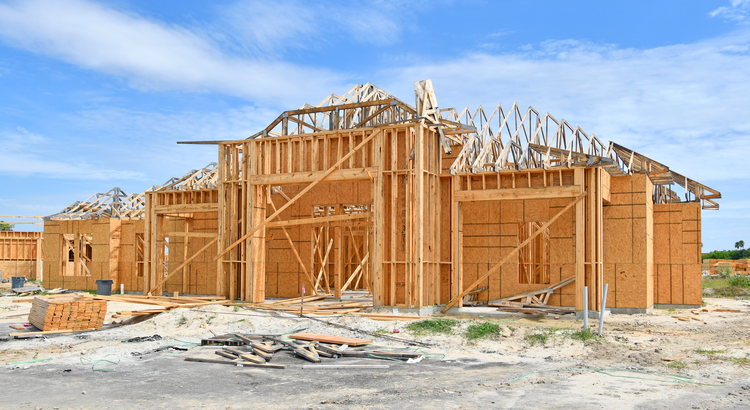
Why You May Want To Seriously Consider a Newly Built Home

Are you putting off your plans to sell because you’re worried you won’t be able to find a home you like when you move? If so, it may be time to consider a newly built home and the benefits that come with one. Here’s why.

Near-Record Percentage of New Home Inventory

Newly built homes are becoming an increasingly significant part of today’s housing inventory. According to the most recent report from the National Association of Home Builders (NAHB):

Newly built homes available for sale accounted for 31% of total homes available for sale in November, compared to an approximate 12% historical average.”

That means the percentage of the total homes available to buy that are newly built is well over two times higher than the norm. And even more new homes are on the way.

Recent data from the Census shows there’s been an uptick in both housing starts (where builders break ground on more new homes) and housing completions (homes where construction just wrapped).

And while some people may worry builders are building too many homes, that isn’t a concern – if anything, the recent increase is really good news. As Lawrence Yun, Chief Economist at the National Association of Realtors (NAR), explains:

“Even more home building will be needed with the housing shortage persisting in most markets . . . Another 30% rise in home construction can easily be absorbed in the marketplace . . .”

How This Helps You 

Since the supply of existing homes for sale is still low right now, the increase of new-home construction can be a game changer because it gives you more options for your search.

Picture yourself in a home that’s new from the ground up: new appliances, fresh paint, fewer maintenance needs because everything is new, and so much more. Doesn’t that sound nice?

And it may be more within reach than you ever imagined. In addition, some builders are offering things like mortgage rate buy-downs for homebuyers right now. This can help offset today’s affordability challenges while also getting you into your dream home. In a recent article, Patrick Duffy, Senior Real Estate Economist at U.S. News, explains:

“Builders have been using mortgage interest rate buydowns for many years as a sales incentive whenever interest rates are relatively high, . . .Today more builders are offering rate buydowns for the entirety of the loan, allowing buyers to finance more home for the same payment amount.”

Just remember, the process of buying from a builder is different from buying from a home seller, so it’s important to partner with a trusted real estate agent who knows the local market. They’ll be your go-to resource for coordinating with the builder, reviewing contracts, and more.

Bottom Line

If you’re trying to sell so you can make a move but you’re having a hard time finding a home you like, let’s connect. That way you have a local expert to help you explore all of your options, including the newly built homes in our area.

Shawna O’Brien
Residential Broker
KW Portfolio Collective, Geist Fishers
317-506-0039
ShawnaOBrienRealtor@gmail.com

There’s Only Half the Inventory of a Normal Housing Market Today

Wondering if it still makes sense to sell your house right now? The short answer is, yes. Especially if you consider how few homes there are for sale today.

You may have heard inventory is low right now, but you may not fully realize just how low or why that’s a perk when you go to sell your house. This graph from Calculated Risk can help put that into perspective: 

As the graph shows, while housing inventory did grow slightly week-over-week (shown in the blue bar), overall supply is still low (shown in the red bars). Compared to the same week last year, supply is down roughly 10% – and it was already considered low at that time. But, if you look further back, you’ll see inventory is down even more significantly.

To gauge just how far off from normal today’s inventory is, let’s compare right now to 2019 (the last normal year in the market). When you compare the same week this year with the matching week in 2019, supply is about 50% lower. That means there are half the homes for sale now than there’d usually be.

The key takeaway? We’re still nowhere near what’s considered a balanced market. There’s plenty of demand for your house because there just aren’t enough homes to go around. As Lawrence Yun, Chief Economist at the National Association of Realtors (NAR), explains:

“There are simply not enough homes for sale. The market can easily absorb a doubling of inventory.”

So, if you want to list your house, know that there’s only about half the inventory there’d usually be in a more normal year. That means your house will be in the spotlight if you sell now and you may see multiple offers and a fast home sale. 

Bottom Line

With the number of homes for sale roughly half of what there’d usually be in a more normal year, you can rest assured there’s demand for your house. If you want to sell, let’s connect now so your house can shine above the rest while inventory is so low.

Shawna O’Brien, Executive Club
F.C. Tucker Geist Fishers
shawna.obrien@talktotucker.com
317-506-0039

Why 2021 Is Still the Year to Sell Your House

Why 2021 Is Still the Year To Sell Your House | MyKCM

If you’re trying to decide whether or not to sell your house, this is the time to think seriously about making a move. Fannie Mae’s recent Home Purchase Sentiment Index (HPSI) reveals the number of respondents who say it’s a good time to sell is higher now than it was over the past few summers (see graph below). Today, the majority of consumers, 75 percent, say it’s a good time to sell a house.

Why is sellers sentiment up year-over-year?

The higher good time to sell sentiment has to do with today’s market conditions, specifically low housing supply and high buyer demand. In the simplest terms, we don’t have enough houses available for sale to meet buyer demand.

Why 2021 Is Still the Year To Sell Your House | MyKCM

According to the latest data from the National Association of Realtors (NAR), we’re still firmly in a sellers’ market because housing supply is well below a balanced norm (shown in the graph below).Clearly, the scales are tipped in a seller’s favor today. But while housing supply is undeniably low, the right side of the graph shows how the inventory situation is improving little by little each month as more sellers list their homes for sale.

As a seller, that means each month, buyers have more options to pick from. By extension, that means your house may get less buyer attention with time. Danielle Hale, Chief Economist for realtor.com, explains it like this:

More homeowners continue to list homes for sale compared to a year ago… Notably, while new listings continue to lag behind a more ‘normal’ 2019 pace, the gap is shrinking. Even though homes continue to sell quickly thanks to high demand and limited supply, new listings are subtly shifting the balance of market conditions in favor of buyers.” 

So, what’s that mean for you?

If you’ve been waiting for the perfect time to sell, there may not be a better chance than right now. Inventory is gradually increasing each month, so selling sooner rather than later will help you maximize your home’s potential.

Bottom Line

If you’re planning to sell your house, 2021 is still the year to do it. The unique mix of low supply and high demand won’t last forever. Let’s connect to discuss what you need to do now to sell your house and take advantage of this sellers’ market.

Shawna O’Brien
shawna.obrien@talktotucker.com
317-506-0039
F.C. Tucker Geist Fishers

4 Good Reasons to Consider Selling Your Home

Why do people decide to move? 

Unless it’s a requirement, such as a job relocation, the research tells us that you, like many homeowners, may decide to sell at some point for one or more of the following reasons:

  • Your home is no longer a good fit. You may have outgrown your current home and need something bigger, maybe with an additional bedroom. Or, the opposite may be true. You may want to downsize into something smaller – and cash in some of the home equity you’ve built up.
  • You’ve got your eye on a different neighborhood. Have you ever driven through an area and thought, “I’d love to live here”? You may think that it’s out-of-reach for you at this time. Is it? You never know until you work the numbers. You might, in fact, qualify for a home in that neighborhood today!
  • You want to be closer to something. Many homeowners would love to live closer to work, family, favorite hobbies, the country, etc. Moving to a home that’s near to one of those “somethings” can have a positive impact on your lifestyle.
  • It’s time for a change. Sometimes a homeowner just wants a change: new surroundings, a fresh start. Who says you need a “practical” reason to sell? If you’re looking to get into a new home just because you feel like it, that’s your choice. In fact, that may be the best reason of all to sell. You may simply want to move.

Do any of these reasons resonate for you? If so, now is the time to start preparing. Even if you don’t anticipate moving for several months, this is the best time to get the process started.

Shawna O’Brien
F.C. Tucker Geist Fishers
shawna.obrien@talktotucker.com
317-506-0039

Clean or Replace Air Filters and Fan Screens

It’s a good idea to clean or replace your home’s air filters and screens at least once a year to help keep your indoor environment safe from mold, dust mites and other allergens.

But don’t stop at your heating, ventilation and cooling/air-conditioning systems. Think of all the other filters and screens that need cleaning, such as those in humidifiers, range hoods, bathroom fans, and windows. Unfortunately, homeowners often neglect to clean or replace their range hood filters. This can lead to a thick buildup of greasy residue that could easily compromise the important function of removing cooking gases, odors and humidity from the stovetop area. The result can be unhealthy air trapped in your kitchen, not to mention an accumulation of a thin film on your walls, ceilings and countertops.

Likewise, bathroom fans and window screens can trap layers of dust over time that will hinder the free flow of air to and from the rooms you want to be well ventilated.

Shawna O’Brien
shawna.obrien@talktotucker.com
F.C. Tucker Geist Fishers
The Tumbarello Group

Visiting Your Local Farmers’ Market in 2020 During the Pandemic

farm

Visiting Your Local Farmers’ Market in 2020 During the Pandemic: A Guide

Restrictions on social activity and shopping put in place over concerns about the viral outbreak are easing in many areas, and numerous local farmers’ markets are set to open just in time for their busy season.

Farmers’ markets are inherently a social experience. They put local growers into direct contact with customers who want to know exactly where their food is produced. They are also cost-effective ways for farmers to get their products directly in the hands of consumers — without going through a retailer in the middle. That puts more profits directly in the pockets of the farmers.

The direct-to-consumer marketing also allows customers to purchase foodstuffs at a reduced cost, which could be increasingly important as consumers try to fill the gaps in what’s available at their local grocer’s or combat rising food prices. The value of farmers’ markets in that regard was made clear in Indiana, at least, when the state declared them to be essential services despite the “ Stay at Home” orders.

None of that, however, means that you can throw caution to the wind and go about business as usual. Outbreaks of the COVID-19 virus may be slowing, but they’re not over. If you’re among the many who can’t wait to browse your local farmers’ market, here’s what you need to keep in mind.

Explore No-Contact Ordering

Maybe you really want to take advantage of the offerings at your local farmers’ market, but you’re just not ready to break social distancing yet to do it. Or, maybe you have a health condition that leaves you immunocompromised or otherwise in a high-risk category and your doctor has ordered you to stay away.

What can you do? Well, farmers’ markets around the country have been getting creative in order to meet the needs of both vendors and customers while still operating responsibly. Quite a few are offering contactless pick-ups.

For example, the Bloomington Online Farmers’ Market right here in Indiana has been encouraging patrons to place their orders online and prepay. Then, they can literally drive right up to the market at the appointed time and collect their meat, eggs, fruit, vegetables, baked goods and more without ever stepping out of their vehicles. It’s a great way to allow everyone access to the items they want without endangering their health.

Shop While Practicing Social Distancing

Another route that many farmers’ markets are taking is reopening — albeit in a restricted fashion that keeps the need for social distancing in mind. If the farmers’ markets in Fishers or Broad Ripple can be held as an example, here’s what you can expect if you decide to go:

• Patrons will be required to enter and exit the markets from a fixed location, rather than milling around the way that they’re probably accustomed to doing in the past.

• The selection of items for sale may be somewhat different than what you’re used to seeing. Expect items to be limited to essential items, like prepared food, hand-made masks, soaps and produce.

• Look for “ social distancing markers” that will help guide you and keep you a respectful distance from vendors and other customers, to reduce the chance of contagion.

• There will be nowhere to consume food while on the premises and there will be no portable restrooms available for use, so it’s important to plan accordingly.

• Don’t expect to touch your food or produce before you buy. While this might disappoint some dedicated “ melon thumpers” this year, most markets will be asking customers to refrain from touching the items for sale.

• Don’t expect to get change back for your purchases. While many vendors will still accept cash, they won’t be able to make change. Take your debit card, SNAP card or a variety of small bills with you when you go.

• Leave the reusable bags at home. If you do take a reusable bag, you’ll likely be asked to put your purchases inside the bag yourself.

It’s also smart to understand that a lot of farmers’ markets are still adjusting and adapting to their new realities — and everything is still in flux. The Original Farmers’ Market at City Market, for example, will only offer prepackaged food items and has eliminated home-based vendors. Rules may shift and change quite a bit as the various markets learn what works (and what doesn’t) for their new setups.

Use Personal Safety Measures

Finally, you need to also take a few steps to help reduce the chances that you’ll either spread the virus or contract it. A farmers’ market is no more dangerous than shopping at a grocery store if you remember these rules:

• Wear a mask. While cloth face masks don’t offer 100% protection from the virus, the CDC recommends them in public to help prevent people from unknowingly transmitting the virus to others when they’re asymptomatic. Indeed, you’re likely to be required to wear one in order to attend just about any farmers’ market you can find — so go prepared.

• Take hand sanitizer or cleaning wipes with you. If you have Clorox wipes or hand sanitizer, put some in your car so that you can wipe your hands, car door handle, steering wheel and debit card down after you are done shopping.

• Don’t take anybody unnecessary with you on the trip. Most farmers’ markets won’t be allowing dogs inside this year, so leave your pet at home. It’s also smarter to limit the number of people from your household who make the trip, just like you do at retail stores.

• Remember not to touch your face until you can wash your hands. Wash all of your produce when you get home and discard your bags (or wash the reusable ones).

The need for social distancing won’t last forever. While it does, we can all make things operate a little smoother — and keep each other a little safer — by remembering the truly cooperative spirit that farmers’ markets embody. We’re all in this together.

Shawna O’Brien
shawna.obrien@talktotucker.com
F.C. Tucker Geist Fishers
The Tumbarello Group

Image result for let's talk tucker

How to Quickly Improve Indoor Air Quality

There are many reasons why the air quality in your home may not be at its best. A faulty furnace or an aged carpet are just two potential culprits. Until you get those issues addressed, how can you make your indoor air healthier – today?

Here are some ideas:

Check the furnace filter. This is one of the most overlooked maintenance items in the home. Any furnace repair person can tell you stories about filters they’ve seen caked in dust. Make sure those aren’t yours. Air passes through those filters before circulating throughout your home. Replacing a filter takes less than five minutes.

Clean the drains. Drains are a surprisingly common source of odor in the home. Most people only clean them when they’re clogged, but they should be flushed thoroughly with a good-quality cleaner at least once a season.

Turn on the bathroom fan. Not only do bathroom fans remove odor, they also reduce moisture build-up. About 50% of air pollutants originate from some type of moisture. Mold is the worst of these pollutants. Professionals recommend you keep your bathroom fan on for at least 30 minutes after a shower.

Clean your doormat. Even if your doormat doesn’t smell, it can be a source of air pollutants. When people wipe their shoes, they transfer outside ground pollutants from their shoes to your mat.

Of course, you can always open a window. That’s the most popular and easiest way to freshen the air, and it works.

Shawna O’Brien
shawna.obrien@talktotucker.com
F.C. Tucker Geist Fishers
The Tumbarello Group