Why You Don’t Want To Skip Your Home Inspection

Why You Don

When you finally find the home you want to buy, it’s easy to get caught up in the excitement. You’ve toured the place, imagined your furniture in it, maybe even pictured your morning coffee on the porch. The last thing you want is to slow down the process with more steps or lose out to another buyer’s offer because they skipped their inspection.

But here’s the thing. Buying a home is one of the biggest financial decisions you’ll ever make. And no matter how perfect that house seems, skipping a home inspection is a risk that could cost you a lot more than just time.

What Exactly Is a Home Inspection?

A home inspection gives you a detailed look at the home’s condition, usually after your offer’s accepted but before closing. While what’s covered varies by state, an inspector usually goes over the home’s major systems and structure, including things like the roof, foundation, plumbing, electrical, HVAC, and more.

Why an Inspection Is Worth It

Here’s a quick rundown of some of the biggest benefits of getting an inspection.

  • Helps you avoid unpleasant surprises. A house might seem move-in ready, but could have issues you didn’t see during your walkthrough. Knowing about these before closing day is important. That way, you have a better idea of what work may need to be done to the home.
  • Gives you negotiating power. Depending on what the inspection turns up, you may want to re-negotiate with the seller. For that, lean on your agent. With their help, you can ask the seller to handle repairs before closing day or provide a credit so you can take care of them yourself.
  • Offers you peace of mind. Buying a home is emotional, especially if you’ve been searching for a while. An inspection helps take some of the uncertainty off your plate, so you can move forward with confidence.

A few hundred dollars upfront for the home inspection could save you thousands in surprise repairs later. As the National Association of Realtors (NAR) says:

“Failure to obtain a home inspection could potentially cost you a great deal of money and hassles in the long run.”  

Why You Don’t Want To Waive Your Inspection

According to the latest data from NAR, nearly 1 in 4 buyers are waiving (or removing) the inspection contingency when they buy a home. And with spring being peak homebuying season and buyer activity already heating up, you may be thinking about doing that yourself. As Realtor.com points out:

“ . . . if you’re in a hot real estate market where homes are getting multiple offers, there might be a temptation to skip an inspection when you really want the house. However, waiving a home inspection comes with sizable risks.”

But skipping the inspection is a gamble that doesn’t necessarily pay off. Just remember, there are other ways to make your offer attractive to sellers, like being flexible with the closing date. Before making an offer, talk to your agent about other ways to get a seller’s attention without sacrificing your peace of mind.

Bottom Line

Even if skipping an inspection sounds like a way to make your offer more competitive or speed things up, it’s risky. It’s not just extra time and documentation, it’s a smart step that protects your wallet, your investment, and your future.

If you could ask a home inspector one question before buying, what would it be? Let your agent know so it’s the first thing they bring up when the time comes. 

Shawna O’Brien
Residential Broker
KW Portfolio Collective, Geist Fishers
317-506-0039
ShawnaOBrienRealtor@gmail.com


How To Buy a Home Without Waiting for Lower Rates

How To Buy a Home Without Waiting for Lower Rates

Many people are hoping mortgage rates will come down before they buy a home. But will that actually happen? According to the latest forecasts, experts say rates will decline, but not by as much as a lot of people want.

The good news? Even if they don’t drop substantially, there are still ways to make buying a home more affordable.

How Much Will Rates Drop?

A few months ago, experts were forecasting mortgage rates could dip below 6% by the end of the year. But recent projections suggest that may not happen after all.

While mortgage rates are still expected to decline some later this year, projections from Fannie Mae, the Mortgage Bankers Association (MBA), and Wells Fargo now show them stabilizing closer to the 6.5% to 7% range (see below):

That means if you’re holding off on buying a home in hopes of much lower mortgage rates, you may be waiting a while. And if you need to move because something in your life has changed, like a new job, a new baby, or a marriage – waiting that long may not be an option.

Creative Financing Options in Today’s Market

Since rates aren’t expected to decline as much as originally expected, it may be worth considering alternative financing options that could help you get into a home sooner rather than later. Here are three strategies to discuss with your lender to see if any of these make sense for you:

1. Mortgage Buydowns

A mortgage buydown allows you to pay an upfront fee to lower your mortgage rate for a set period of time. This can be especially helpful if you want or need a lower monthly payment early on. In fact, 27% of agents say first-time homebuyers are increasingly requesting buydowns from sellers in order to buy a home right now.

2. Adjustable-Rate Mortgages

Adjustable-rate mortgages (ARMs) typically start with a lower mortgage rate than a traditional 30-year fixed mortgage. This makes them an attractive option, especially if you expect rates to drop in the coming years or plan to refinance later.

And if you remember the housing crash, know that today’s ARMs aren’t like the risky ones back then. Lance Lambert, Co-Founder of ResiClub, helps drive this point home by saying:

. . . ARM products today are different from many of the products issued in the mid-2000s. Before 2008, lenders often approved ARMs based on borrowers ability to pay the initial lower interest rates. And sometimes they didn’t even check that (remember Ninja loans). Today, adjustable-rate borrowers qualify based on their ability to cover a higher monthly payment, not just the initial lower payment.”

In simple terms, banks used to give loans without checking to see if buyers could afford them. Now, lenders verify income, assets, and jobs, reducing the risks associated with ARMs compared to the past.

3. Assumable Mortgages

An assumable mortgage allows you to take over the seller’s existing loan — including its lower mortgage rate. And with more than 11 million homes qualifying for this option according to U.S. News, it’s worth exploring if you want or need a better rate.

Bottom Line

Waiting for a big decline in mortgage rates may not be the best strategy. Instead, options like buydowns, ARMs, or assumable mortgages could make homeownership more affordable right now. Connect with a local lender to explore what works for you.

Shawna O’Brien
Residential Broker
KW Portfolio Collective, Geist Fishers
317-506-0039
ShawnaOBrienRealtor@gmail.com

Understanding Mortgage Down Payments

Buying a home is a major financial decision — one of the largest you’ll likely make in your lifetime. A significant part of this process is saving up for a mortgage down payment. Many homebuyers will work hard and save for many years to build up their savings for this important purchase. But what amount is right for you? How much money do you need to save for a down payment on a house? It all depends on the cost of the home you’re looking to buy and what your personal financial situation and goals are.

What Is a Mortgage Down Payment?

A down payment on a mortgage or home loan is the cash amount you pay to the seller that makes up the difference between the price of the home and the loan amount.

What Is the Minimum Down Payment Required for a Mortgage?

There are different requirements for down payments, depending on the type of home loan you might want to consider:

Going Conventional

The traditional mortgage down payment amount is 20%. For example, if the home you’re looking to purchase is $200,000, then the down payment will be $40,000. Having this amount will save you from paying mortgage insurance, which is a fee that’s added to your monthly payments that protects lenders in case you’re unable to pay the mortgage. But what if you want to buy a home and don’t have the full 20% down payment saved?

Some available options are:

  • 97% Loan-to-Value (LTV) — A conventional mortgage in which your loan amount is 97% of the value of the home, and you only have to make a 3% down payment. Mortgage insurance will be required.
  • Lender-Paid Mortgage Insurance (LPMI) — If you can’t make the full 20% down payment, then we may be able to pay your mortgage insurance for you. However, your interest rate will be slightly higher to cover this expense.

Going Government

The U.S. government offers a variety of home purchase programs that help make homeownership possible for more people. These programs are offered through agencies such as the Federal Housing Administration (FHA), the U.S. Department of Agriculture (USDA), and the U.S. Department of Veterans Affairs (VA). Each of these agencies offers specific mortgage loan programs with different down payment requirements:

  • FHA Home Loan— This loan is a great option for first-time buyers and those with financial or credit setbacks. The required down payment amount for an FHA home loan is 3.5%, and a parent or relative can be a co-applicant on the loan with you. Mortgage insurance will be required.
  • FHA 203(k) Rehabilitation Loan— Want to buy a home that needs repairs? With an FHA 203(k) rehab loan, you can finance a home and many qualifying repairs. Two versions are available depending on the type of repairs required and their costs. Mortgage insurance will be required.
  • USDA Rural Home Loan— If the home you’re looking to buy is in a designated USDA rural area, then you may be able to qualify for a USDA home loan. This program provides up to 100% financing, which means no down payment is required. View a map of the designated rural areas to see if the property you’re interested in is eligible.
  • VA Home Loan— As a benefit for your service to our country, the VA works with lenders to provide veterans a flexible solution for buying a home. You’ll get a competitive interest rate and don’t have to make a down payment unless you want to.

Shawna O’Brien
Residential Broker
KW Portfolio Collective, Geist Fishers
317-506-0039
ShawnaOBrienRealtor@gmail.com
What Lower Mortgage Rates Mean for Your Purchasing Power

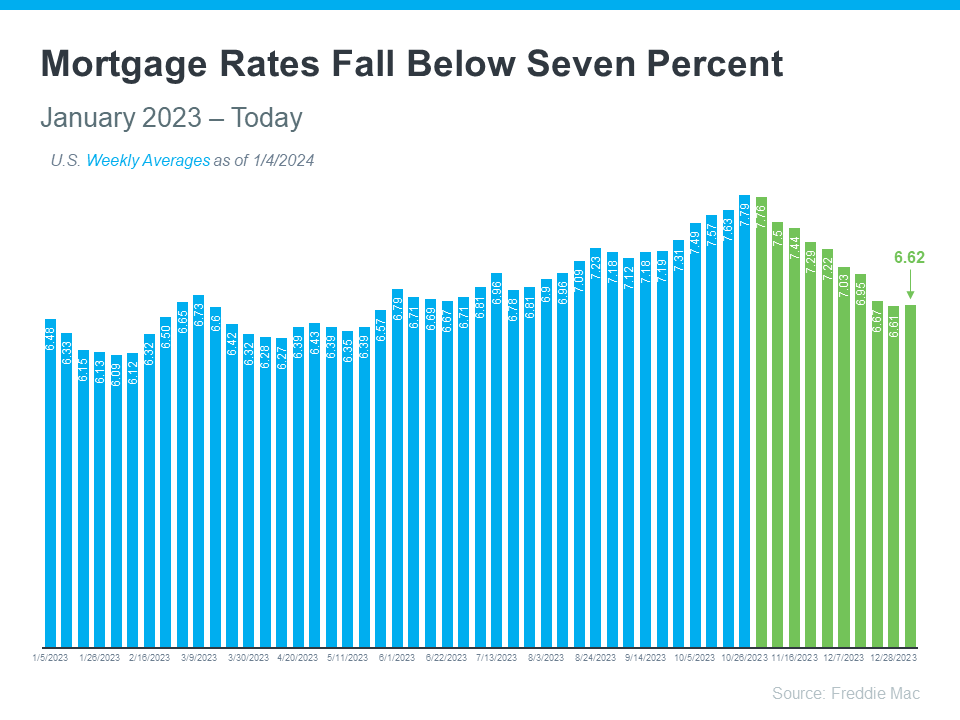
If you want to buy a home, it’s important to know how mortgage rates impact what you can afford and how much you’ll pay each month. Fortunately, rates for 30-year fixed mortgages have come down significantly since the end of October and are currently under 7%, according to Freddie Mac (see graph below):

This recent trend is great news for buyers. As a recent article from Bankrate says:

“The rate cool-off somewhat eases the housing affordability squeeze.”

And according to Edward Seiler, AVP of Housing Economics and Executive Director of the Research Institute for Housing America at the Mortgage Bankers Association (MBA):

“MBA expects that affordability conditions will continue to improve as mortgage rates decline . . .”

Here’s a bit more context on how this could help with your plans to buy a home.

How Mortgage Rates Affect Your Search for a Home

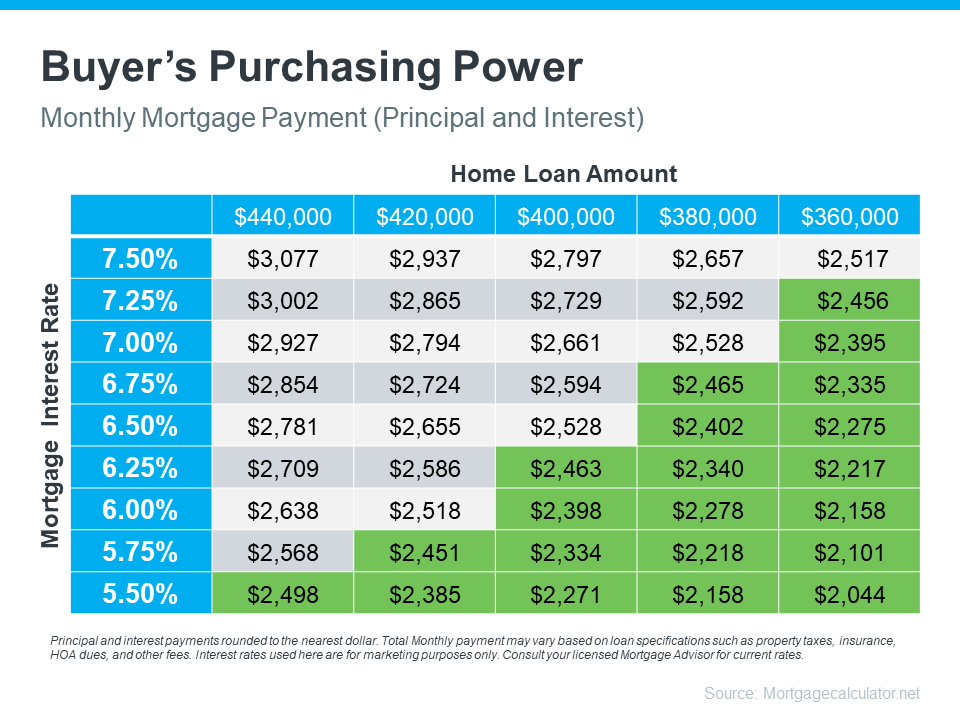
Understanding the connection between mortgage rates and your monthly home payment is crucial for your plans to become a homeowner. The chart below illustrates how your ability to afford a home changes when mortgage rates shift. Imagine your budget allows for a monthly payment between $2,400 and $2,500. The green part in the chart shows payments in that range or lower (see chart below):

As you can see, even small changes in rates can affect your budget and the loan amount you can afford.

Get Help from Reliable Experts To Understand Your Budget and Plan Ahead

When you’re looking to buy a home, it’s important to get guidance from a local real estate agent and a trusted lender. They can help you explore different mortgage options, understand what makes mortgage rates go up or down, and how those changes impact you.

By looking at the numbers and the latest data together, then adjusting your strategy based on today’s rates, you’ll be better prepared and ready to buy a home.

Bottom Line

If you’re looking to buy a home, you should know the recent downward trend in mortgage rates is good news for your move. Let’s connect and plan your next steps.

Shawna O’Brien
Residential Broker
KW Portfolio Collective, Geist Fishers
317-506-0039
ShawnaOBrienRealtor@gmail.com